Companies in Barcelona: INE data, sectors and how to sell to them
Official INE (DIRCE 2025) figures for Barcelona: how many companies and sizes, where B2B demand concentrates, and the channels that work to win clients.
 Francesc Beumala · Founder, partner and CEO of ARTIC
In this article
- The real size of Barcelona’s B2B market (INE 2025)
- What it means for your B2B: client sizes and value proposition
- Where demand concentrates: sectors and areas across the province
- Channels that work: SEO, local SEO, Google Ads, LinkedIn Ads, a converting website and AI search visibility
- Strategy by company size: micro, SME and key accounts
- Budget, lead forecast and ROI: how to estimate rigorously
- A 90‑day plan to get traction in the province of Barcelona
- Cases and lessons applied to Barcelona by sector
- Frequently asked questions
- Sources and methodology
According to Spain’s INE (DIRCE, active enterprises as of 1 January 2025), the province of Barcelona has 458,826 companies, up 1.2% vs 2024. Of these, 23,670 have 10+ employees (5.2% of the provincial total), accounting for 14.7% of all 10+ firms in Spain.
Key takeaways
- 458,826 active companies in Barcelona (INE, DIRCE 2025), +1.2% year-on-year.
- 56.8% are non-employers and 38.0% have 1–9 employees (2025).
- 23,670 firms have 10+ employees (5.2% of total), placing Barcelona 2nd in Spain.
- Industrial demand clusters in Zona Franca, Vallès, Martorell and Penedès.
- Winning channels: SEO, local SEO, Google Ads, LinkedIn Ads, conversion-led website and SEO for AI.
The real size of Barcelona’s B2B market (INE 2025)
Start with the facts. Spain’s National Statistics Institute (INE), through DIRCE (active enterprises as of 1 January 2025, compared with 2024), reports 458,826 companies in the province of Barcelona, a 1.2% rise year-on-year. This scale makes Barcelona a broad, dynamic B2B market spanning industrial supply chains and advanced services across Catalonia.
Size distribution shapes your go-to-market:
- Non-employers: 260,839 (56.8%).
- 1 to 9 employees: 174,317 (38.0%).
- 10 to 49: 19,025 (4.1%).
- 50 to 249: 3,672 (0.8%).
- 250 or more: 973 (0.2%).
The bulk is micro and small firms, yet structured B2B purchasing concentrates in the 23,670 companies with 10+ employees (5.2% of the provincial total). Barcelona also holds 14.7% of all 10+ employee firms in Spain (161,472), a pivotal insight if you sell industrial, technology or professional services to mid-sized and large organisations.
To visualise opportunity by firm size and prioritise your ICPs by purchasing capacity and sales cycle, see the following distribution.
- No employees
- 1 to 9 employees
- 10 to 49 employees
- 50 to 249 employees
- 250+ employees
Source: INE, DIRCE 2025
On the national ranking of companies with 10+ employees, Barcelona is 2nd (23,670), behind Madrid (28,431) and ahead of Valencia (9,309), Alicante (6,502), Seville (5,987) and Málaga (5,533). Within Catalonia, Barcelona exceeds Girona (3,196), Tarragona (2,347) and Lleida (1,625). This positioning confirms Barcelona as a first-tier B2B hub in Spain.
- Madrid
- Barcelona
- Valencia
- Alicante
- Seville
- Málaga
- Girona
- Tarragona
- Lleida
Source: INE, DIRCE 2025
Barcelona B2B in official figures (INE, DIRCE, active enterprises as of 1 January, 2025 vs 2024)
| Indicator | 2025 figure | 2024 figure | Source |
|---|---|---|---|
| Total companies in Barcelona | 458,826 | 453,568 | INE (DIRCE) 2025 |
| Year-on-year variation | 1.2% | - | INE (DIRCE) 2025 |
| Non-employers | 260,839 (56.8%) | 228,729 | INE (DIRCE) 2025 |
| 1 to 9 employees | 174,317 (38.0%) | 201,024 | INE (DIRCE) 2025 |
| 10 to 49 employees | 19,025 (4.1%) | 19,246 | INE (DIRCE) 2025 |
| 50 to 249 employees | 3,672 (0.8%) | 3,649 | INE (DIRCE) 2025 |
| 250 or more employees | 973 (0.2%) | 920 | INE (DIRCE) 2025 |
| Companies with 10+ employees (Barcelona) | 23,670 (5.2% of total; 14.7% of Spain) | 23,815 | INE (DIRCE) 2025 |
| Spain total (10+ employees) | 161,472 | - | INE (DIRCE) 2025 |
What it means for your B2B: client sizes and value proposition
The INE (DIRCE 2025) figures are not only “market size”; they are a tactical compass. Where volume is higher (micro and small), you will find shorter cycles, contained tickets and faster decisions. Where volume is lower (10+ employees), expect RFPs, buying committees and recurring contracts.
How to translate this into proposition and funnel:
- Micro and small (0–9 employees): target concrete offers, simple onboarding and clear pricing. Key assets: services page with direct messages and demo/proof; SEO content answering “problem → solution”; highly localised campaigns by municipality/postcode.
- Mid-sized (10–49): sector use cases, ROI and comparisons. Key assets: sector/technology pages, project sheets and technical webinars.
- Upper mid-market (50–249) and corporate (250+): consultative sales and ABM, sales–marketing alignment and 3–6 month opportunity development. Key assets: tailored one-pagers, whitepapers, workshops and social selling.
Practical example: an industrial maintenance company aiming at the Vallès industrial estates.
- Define 50 target accounts with 10–249 employees (prioritise machinery and capital goods).
- Build pages for “predictive maintenance”, “retrofit” and “machine safety”.
- Launch combined search campaigns on transactional terms and LinkedIn Ads to operations and maintenance roles.
- Trigger email-and-call sequences only to leads who visit high-intent pages.
If your focus is more transactional (1–9 employees), simplify: local ads + a short-form landing + demo scheduling + remarketing. For 10+, plan for nurturing with multiple touches and deeper decision materials.
Where demand concentrates: sectors and areas across the province
Barcelona is Catalonia’s largest industrial market, with strong clusters in automotive and components, chemicals, pharma and healthcare, agri-food, logistics and transport, and machinery and capital goods. Demand is spatially concentrated in high-density business areas: Zona Franca de Barcelona, the Vallès industrial estates, Martorell, and the Penedès estates. Major municipalities—Barcelona, L’Hospitalet de Llobregat, Terrassa, Sabadell and Vilafranca del Penedès—combine industry, logistics and advanced services that power B2B chains.
How to activate demand by sector and area:
- Automotive (Martorell and Vallès suppliers): build assets for process engineering, tooling and maintenance, with pages for tier 1/tier 2 and certifications.
- Chemicals and pharma (metro area): prioritise compliance, GMP and safety content; case stories on cleanroom or packaging deployments.
- Agri-food (Penedès): message around food safety, energy efficiency and cold-chain logistics.
- Logistics (Zona Franca): emphasise productivity, SLAs and cycle-time reduction; offerings for 3PL operators.
- Machinery and capital goods (Vallès): technical demos, retrofit and after-sales service.
Applied example 1: an automation provider in Terrassa. 1) List 80 target accounts in Vallès; 2) create “line automation – capital goods” page; 3) target “PLC integrator Sabadell/Terrassa” via search and add local SEO for industrial estates; 4) run LinkedIn outreach to maintenance heads.
Applied example 2: a logistics operator in Zona Franca. 1) Launch “B2B logistics in Barcelona – Zona Franca” landing; 2) bid on “cross-docking Barcelona”; 3) publish content on “customs and pharma”; 4) schedule on-site visits to 10+ employee accounts in the port area.
Channels that work: SEO, local SEO, Google Ads, LinkedIn Ads, a converting website and AI search visibility
In a broad, competitive market like Barcelona, combine intent channels (search) with discovery/ABM channels (professional networks), underpinned by a website that converts.
- SEO for B2B: capture active demand with pages by service, sector and area. Optimise for transactional intent and technical content. If you need research, architecture and content at pace, consider a specialist SEO agency for B2B.
- Local SEO: essential for geo-qualified searches (“industrial maintenance Vallès”, “logistics Zona Franca”). Work on listings, NAP consistency and pages per estate/municipality with a Local SEO agency.
- Google Ads for B2B: accelerate capture on high-intent keywords, protect brand and test propositions. Start with tight match types and in-market audiences with a Google Ads partner for B2B.
- LinkedIn Ads: ideal for ABM, precise job titles and high-intent remarketing. Design messages by role and funnel stage with a LinkedIn Ads B2B partner.
- Conversion-led website: structure by use cases, sectors and proof. Avoid generic menus; emphasise clear CTAs and pages for “procurement” and “operations”. If you plan a redesign, do it with a B2B web design agency.
- SEO for AI search (GEO/AEO): ensure assistants can quote you with clear, verifiable answers, FAQs and structured data via a B2B SEO for AI team.
- Automation: lead scoring, qualification and sales handoff, supported by AI process automation for B2B.
The optimal mix: search (SEO + Ads) to harvest intent, LinkedIn to activate accounts, and content to educate buying committees.
Strategy by company size: micro, SME and key accounts
With Barcelona’s 2025 mix (dominant micro and small firms, plus a core of 23,670 companies with 10+ employees), you need a dual motion: efficiency for volume and depth for key accounts.
- Micro and small (0–9): a packaged product/service motion. Clear pages, visible pricing and demos. Local campaigns by municipality and industrial estate. Short nurturing sequences.
- Mid-sized SME (10–49): ROI-focused content, technical datasheets, comparisons and webinars. High-intent retargeting and email sequences with case material.
- 50–249 and 250+: full ABM. Define ICP, buying centre (operations, procurement, engineering, IT), pain-led messaging and quantified value; orchestrate Ads, LinkedIn, outreach and events. Measure per account (visits, engagement, meetings) alongside MQL/SQL.
Playbook for a machinery manufacturer in Sabadell:
- ICP per sub-vertical (automotive, food, pharma), 30–60 accounts each.
- Assets: one-pagers per vertical, 90-second machine-in-operation videos, TCO checklists.
- SEO by use cases (“line retrofit in Vallès”, “predictive maintenance Barcelona”).
- Google Ads on high-intent exact keywords; exclude DIY/consumer terms.
- LinkedIn Ads to Operations, Maintenance and Plant Manager; view → lead gen → meeting.
- Coordinated sales sequence: SDR email + call after signals (pricing/ROI page visits).
This lets you scale efficiently with micro/SMEs while building larger, longer deals in the 10+ employee segment, which INE (DIRCE 2025) shows is abundant in Barcelona.
Budget, lead forecast and ROI: how to estimate rigorously
Estimating B2B ROI in Barcelona hinges on three anchors: market size (DIRCE 2025), search intent and your internal funnel rates. You do not need external guesswork—your baselines and discipline are enough.
Six-step method:
- Define segments by size (0–9, 10–49, 50–249, 250+) and by sector (automotive, chemicals, pharma, agri-food, logistics, machinery) based on real provincial opportunities.
- Size active demand: transactional search volumes per service/sector/municipality and seasonality; prioritise clearly B2B keywords.
- Assign channels by stage: SEO/Ads for acquisition, LinkedIn for account activation, content for evaluation and the website for conversion.
- Project performance with your historic rates: CTR, lead CVR, SQL rate and win rate. If you lack data, start with conservative hypotheses and review every 4 weeks.
- Allocate budget per channel by opportunity cost: defend core keywords in Ads, fund a minimum viable ABM in LinkedIn, and invest in compounding SEO content.
- Calculate break-even per segment (CAC vs gross margin) and payback by sales cycle.
To run the numbers with your inputs, use the interactive ROI calculator below. Enter your average deal size, conversion rates and channel costs to get base and conservative scenarios.
Estimate the return of your B2B lead generation
Enter your numbers. The values shown are just an example to get started.
- Leads per month
- –
- New clients per year
- –
- Estimated yearly sales
- –
- Return on investment
- –
Indicative estimate: real results depend on the industry, the offer and sales capacity.
Get an estimate with my dataOperational tip: always split forecasts between “0–9 SMEs” (short cycles) and “10+” (longer cycles). As INE (DIRCE 2025) shows, Barcelona has both in abundance—yet their capture and maturation dynamics differ markedly.
A 90‑day plan to get traction in the province of Barcelona
A focused 90-day plan helps you learn from Barcelona’s real market while protecting resources.
Days 1–15: strategy and ICP
- Select 2–3 verticals (e.g., machinery in Vallès, logistics in Zona Franca, agri-food in Penedès).
- Define target sizes (0–9 for transactional motion; 10–49 and 50–249 for ABM pipeline).
- Map pain points and role-based messages: operations, procurement, maintenance, IT.
Days 16–45: minimum viable assets and campaigns
- Website: create 3–5 landings by sector/use case with clear CTAs and short forms.
- Content: 4 problem → solution pieces with local focus and FAQs optimised for AI answers.
- Local SEO: pages per municipality/estate and NAP optimisation.
- Ads: 10–20 high-intent search keywords + 2 ABM audiences on LinkedIn.
Days 46–75: orchestration and sales
- Nurturing sequences by funnel stage.
- Weekly sales–marketing alignment with account-level pipeline (10+ employees) and channel view (0–9).
- A/B test messages and creatives.
Days 76–90: measurement and scale-up
- Review CAC, SQL rate and pipeline velocity; double down on what works.
- Plan compounding content (SEO) and segment ABM by intent signals.
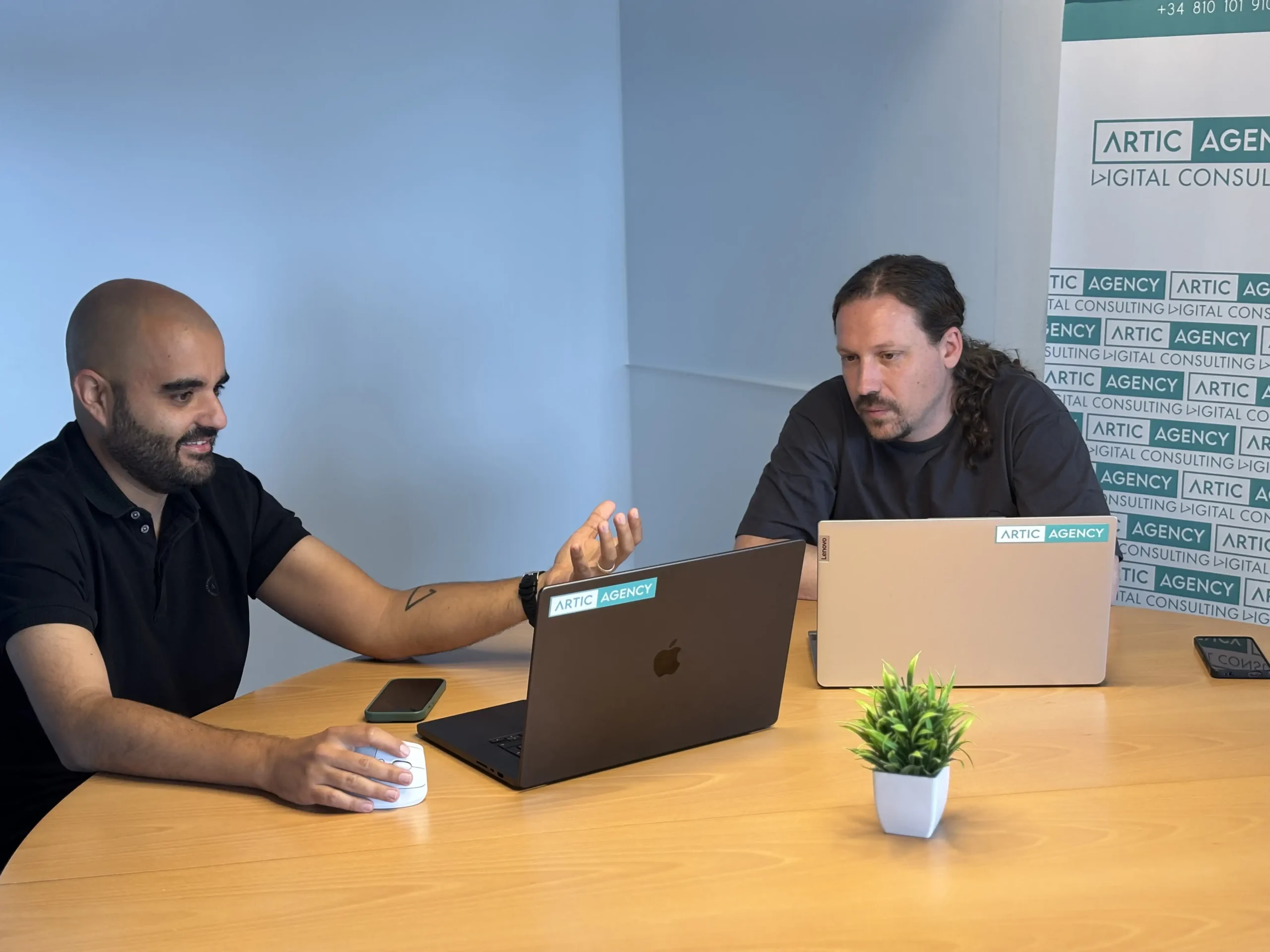
If you want hands-on help to implement in Barcelona with coordinated channels and knowledge transfer, ARTIC can support the rollout. For a deeper regional approach, see our B2B marketing agency in Barcelona.
Cases and lessons applied to Barcelona by sector
Turning principles into pipeline requires sector-specific execution and proof. In technical industries, content and value propositions must be specific and verifiable.
- Engineering and capital goods (Vallès): an approach like “No. 2 Engineering: Marketing for an Engineering” shows how aligning positioning, technical assets and capture—highlighting project experience and a clear offer for operations and technical leadership—helps unlock qualified demand. See the case: Marketing for an industrial engineering firm.
- Energy and industrial services (metro area and Zona Franca): “Energía GDG: Professionalizing the digital presence of energy companies” illustrates how organising the digital presence, clarifying services and enabling a consistent funnel accelerates qualified opportunities. See the case: Professionalising a B2B energy company’s digital presence.
Applied playbooks in Barcelona:
- Automotive (Martorell): pages for “tooling”, “line automation” and “predictive maintenance”; high-intent Ads; social proof with relevant projects.
- Chemicals and pharma (Barcelona and Baix Llobregat): compliance and GMP content, implementation stories and technical FAQs; LinkedIn Ads to quality, production and compliance roles.
- Agri-food (Penedès): focus on energy efficiency, food safety and cold-chain logistics; local SEO and partnerships with logistics operators.
- Logistics (Zona Franca): landings on SLAs, cross-docking and pharma; transactional search and coordinated outreach.
ARTIC works side by side with in-house teams so capability stays in-house and programmes remain sustainable for the province of Barcelona (Spain).
Frequently asked questions
How many potential B2B customers are in Barcelona?
Per Spain’s INE (DIRCE, active enterprises as of 1 January 2025), the province has 458,826 companies. Of these, 23,670 have 10+ employees—the segment most likely to follow structured B2B buying processes.
Which parts of the province concentrate the most B2B activity?
Zona Franca de Barcelona, the Vallès industrial estates, Martorell and the Penedès estates are standout hubs. Major municipalities include Barcelona, L’Hospitalet de Llobregat, Terrassa, Sabadell and Vilafranca del Penedès.
Which B2B sectors are most relevant in Barcelona?
Automotive and components, chemicals, pharma and healthcare, agri-food, logistics and transport, and machinery and capital goods. These clusters sustain ongoing technical and professional-services demand.
Which channels work best to win B2B clients in Barcelona?
A balanced mix of SEO and Google Ads for purchase intent, LinkedIn Ads for ABM and account activation, and a conversion-oriented website. Local SEO and SEO for AI help you capture geo-context searches and appear in assistants.
How should I adapt acquisition by target company size?
For 0–9 employees, prioritise clarity and speed (packaged offer, local Ads, simple forms). For 10+ employees, use consultative selling and ABM (technical assets, nurturing sequences, LinkedIn by role, and tight sales orchestration).
What results timeline should I expect in B2B?
It depends on your sales cycle and account size. Micro/SMEs (0–9) often show traction earlier; 10+ employee deals typically have longer pipelines. Model ROI with your internal metrics and review every 4 weeks.
Do I need SEO for AI as well as traditional SEO?
Yes, if you want visibility in AI search and assistants. Structure clear, citable answers, FAQs and verifiable data with schema. Traditional SEO remains key for transactional queries; AI adds an emerging discovery channel.
Sources and methodology
- Active companies by province and number of employees: INE (Spanish Statistics Institute), Central Business Register (DIRCE), table 39374.
- Sectors, towns and business areas: general public information compiled by ARTIC.
- The linked client examples are real ARTIC projects. Calculators are indicative.