

Technical SEO is the discipline that ensures search engines can correctly crawl, interpret, and index a website's content. For an industrial company, this is no small matter. 95% of the time The chosen vendor is already on the buyer's shortlist from the very first contact. This means that if your company doesn't appear in specific technical searches before the decision-maker forms their shortlist, you're out of the buying process before it even begins. Investing in technical SEO is the only way to ensure that early presence, and doing it right in 2026 requires attention to website architecture, Core Web Vitals, structured data, and crawl budget management.
Why invest in technical SEO if you already have an online presence?
Having an active website doesn't equate to visibility. Technical SEO solves the underlying problem: enabling Google to read, understand, and rank your content in front of the right decision-makers at the right time.
Web architecture and content hierarchy
A siloed structure organizes content by product or service families, making it easier for search engines to understand the relationships between pages and assign authority consistently. An industrial website without this hierarchy features disconnected product pages that compete with each other instead of reinforcing one another. The result is keyword cannibalization and a loss of rankings in searches with high purchase intent.

Speed and Core Web Vitals in Industrial Environments
Core Web Vitals are performance metrics that Google uses directly as a ranking signal. Converting catalog images to WebP format, removing blocking JavaScript, and using a content delivery network (CDN) are concrete actions that reduce load times and maintain high crawl frequency. A slow website not only loses rankings but also loses the attention of the purchasing engineer looking for technical specifications on their mobile device at the factory floor.
Tracking budget management
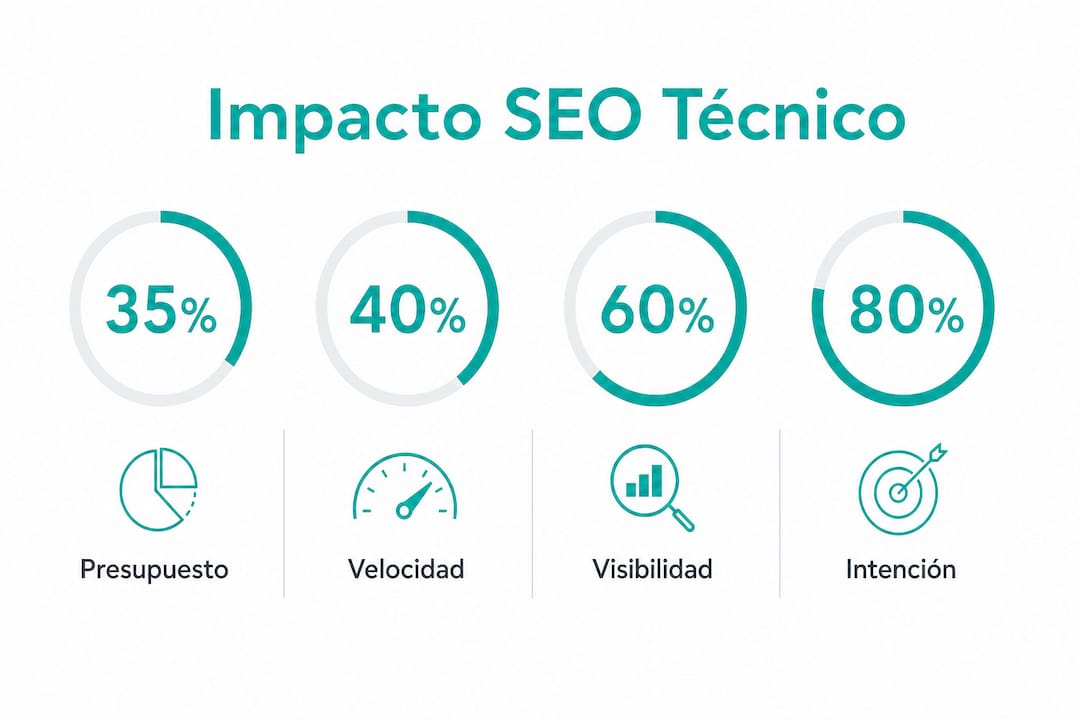
Industrial websites waste between 30% and 40% of their crawl budget on low-value pages, such as dynamic filters or catalog variations without differentiating content. This wasted budget prevents Google from indexing critical product pages. Blocking faceted crawling using the robots.txt file and managing URL parameters with canonical tags directly corrects this problem.
Structured data for manufacturers
The Product, Organization, FAQPage, and BreadcrumbList schema markup allows search engines and AI systems to understand the name, description, SKU, certifications, and navigation hierarchy of each product. Implementing it correctly generates richer results on search engine results pages and improves visibility in generative search engines like Perplexity or Google AI Overviews.
Professional advice: Audit your website's robots.txt file before taking any other action. A single incorrect line of blocking can prevent Google from indexing an entire product section for months.
What makes technical SEO profitable for the industry?
Technical SEO focused on industrial searches doesn't compete for traffic volume. It competes for quality of intent.
A purchasing manager searching for "certified ATEX DN200 butterfly valve" isn't exploring options; they're about to issue a request for quotation. Capturing that search with a well-structured, indexed technical page containing accurate structured data generates a lead with genuine purchase intent. That lead is worth more than a thousand visits from a generic article about "types of industrial valves.".
Clusters of 10–15 well-structured technical articles They outperform blogs with hundreds of generic posts. This is because search engines value thematic coherence and technical depth over quantity of content. A well-constructed cluster around a product family ranks for multiple long-tail keywords with specific purchase intent, including part numbers, applicable regulations, and installation specifications.
«"A technical article that generates three leads per month, with an average ticket price of €50,000 and a 20% closing rate, produces an annual value of €360,000. Well-executed technical SEO is not a marketing expense: it's business infrastructure."»
Source: B2B industrial marketing and SEO
The difference with paid advertising is structural. A pay-per-click campaign generates visibility while you're paying. Technical SEO generates visibility cumulatively: each well-positioned page continues to attract qualified traffic months and years after its publication. For companies with long sales cycles and high average order values, this compound return clearly surpasses the short-lived investment in advertising.
Integration with artificial intelligence further strengthens this argument. Platforms like Perplexity or Google's generative summaries cite structured technical content to answer questions from industry buyers. According to industry analysis, SEO and AI integration It significantly boosts lead generation. An industrial website with well-structured data and indexable technical content is more likely to appear in these generative responses, extending visibility beyond traditional search results.
Common mistakes in technical SEO for industrial websites
The most common technical problems on industrial websites are not difficult to identify, but they are costly to ignore.
PDF catalogs instead of HTML pages. Google indexes PDFs less frequently These don't support structured data or internal linking to transfer authority. The solution is to rebuild the technical data sheets as HTML pages with indexable specification tables. Each product sheet then becomes a searchable URL with its own search intent.
Duplicate content in extensive catalogs. Product variations (sizes, colors, nominal pressures) generate nearly identical URLs that confuse crawlers. Using canonical tags or combining variations on a single page with an attribute selector eliminates the problem without losing business information.
Lack of mobile optimization. The purchasing engineer checks specifications on their mobile phone while on the factory floor. A website that doesn't load correctly on mobile devices loses its ranking on Google and loses the user before they even reach the contact form.
Erroneous blocks in robots.txt. Reviewing the robots.txt file to ensure access for Google crawlers and AI bots is a basic task that many industrial websites neglect. An accidental block on a product folder can remove dozens of pages from Google's index without anyone noticing for months.
Keyword cannibalization due to poor URL structure. When multiple pages compete for the same keyword, none rank well. Auditing the URL structure and assigning a unique search intent to each page resolves cannibalization and concentrates authority where it matters most.
Professional advice: Use Google Search Console to identify pages with high impressions and low clicks. These pages appear in relevant searches but fail to convince users to click, often indicating a problem with the title, meta description, or misaligned search intent.
How to integrate technical SEO with business strategy?
Technical SEO in isolation produces visibility metrics. Integrated with a business strategy, it produces measurable business results.
CRM connection. Integrating technical SEO with CRM allows you to link each organic lead to the content they consumed before contacting you. This identifies which technical pages generate genuine quote requests and where to focus your content efforts in the next quarter.
Coordination with the product roadmap. Publishing technical content aligned with product launches ensures that new pages start ranking before the product is even available. Technical SEO anticipates demand, not reacts after the fact.
Cumulative digital infrastructure. Each well-positioned page adds authority to the domain and facilitates the ranking of subsequent pages. Unlike paid campaigns, technical SEO builds a digital asset that grows over time. Benefits of digital marketing in manufacturing They include precisely this ability to generate demand continuously without proportionally increasing the budget.
Complement to paid campaigns. Technical SEO and SEM don't compete: they complement each other. Paid campaigns capture immediate demand; technical SEO captures demand in the early stages of the buying cycle, when the decision-maker is still forming their list of suppliers. SEM strategy for industry that lacks technical SEO support pays for visibility that could be organic.
Key business metrics. The relevant metrics aren't visits or rankings: they're qualified leads per channel, organic-to-quote conversion rate, cost per organic lead, and pipeline value attributed to SEO. Successful industrial SEO is measured by acquiring leads with genuine purchase intent, not by visitor volume.
ARTIC: Specialized technical SEO for industrial companies
ARTIC works with industrial companies that need real visibility with purchasing decision-makers, not just generic traffic. ARTIC's approach combines in-depth technical auditing, search-oriented content architecture focused on purchase intent, and direct integration with the client's CRM to measure the business impact of every action. As a certified Google and SE Ranking partner, ARTIC manages projects in Technical SEO for manufacturers With clear KPIs and bi-weekly results reviews. If you want to know how technical SEO can be integrated into your digital marketing strategy and sustainably generate qualified leads, the ARTIC team is available for a no-obligation consultation.
Frequently Asked Questions
What is technical SEO and why does it matter in industry?
Technical SEO is the set of configurations that allow search engines to crawl, index, and rank a website correctly. In industry, this is important because 95% of buyers already have their shortlist of suppliers formed before the first contact, and only companies with effective organic visibility appear on that list.
How long does it take for technical SEO to show results?
The first technical results, such as correcting indexing errors or improving speed, are visible within weeks. The impact on search engine ranking and generating qualified leads becomes fully realized within 4–6 months, depending on industry competition and the initial state of the website.
Does technical SEO replace paid advertising?
It doesn't replace paid advertising: it complements it. Paid campaigns generate immediate visibility; technical SEO generates cumulative visibility over the long term. Together, both tactics cover the entire industrial buying cycle, from the discovery phase to the request for proposal.
What technical errors are most common on industrial websites?
The most frequent errors are the use of PDFs for technical catalogs, duplicate content for product variations, incorrect robots.txt blocks, and a lack of structured data. Each of these errors directly reduces Google's ability to index and rank the most relevant product pages.
How do you measure the return on investment of technical SEO in an industrial company?
Return on investment (ROI) is measured by connecting organic traffic with the CRM: leads generated through organic channels, conversion rate to quote requests, and attributed pipeline value. A well-positioned technical article can generate recurring leads with high transaction values, making technical SEO one of the highest-yielding long-term investments in B2B industrial marketing.